

Current Happenings
How Office Space Impacts Employee Retention
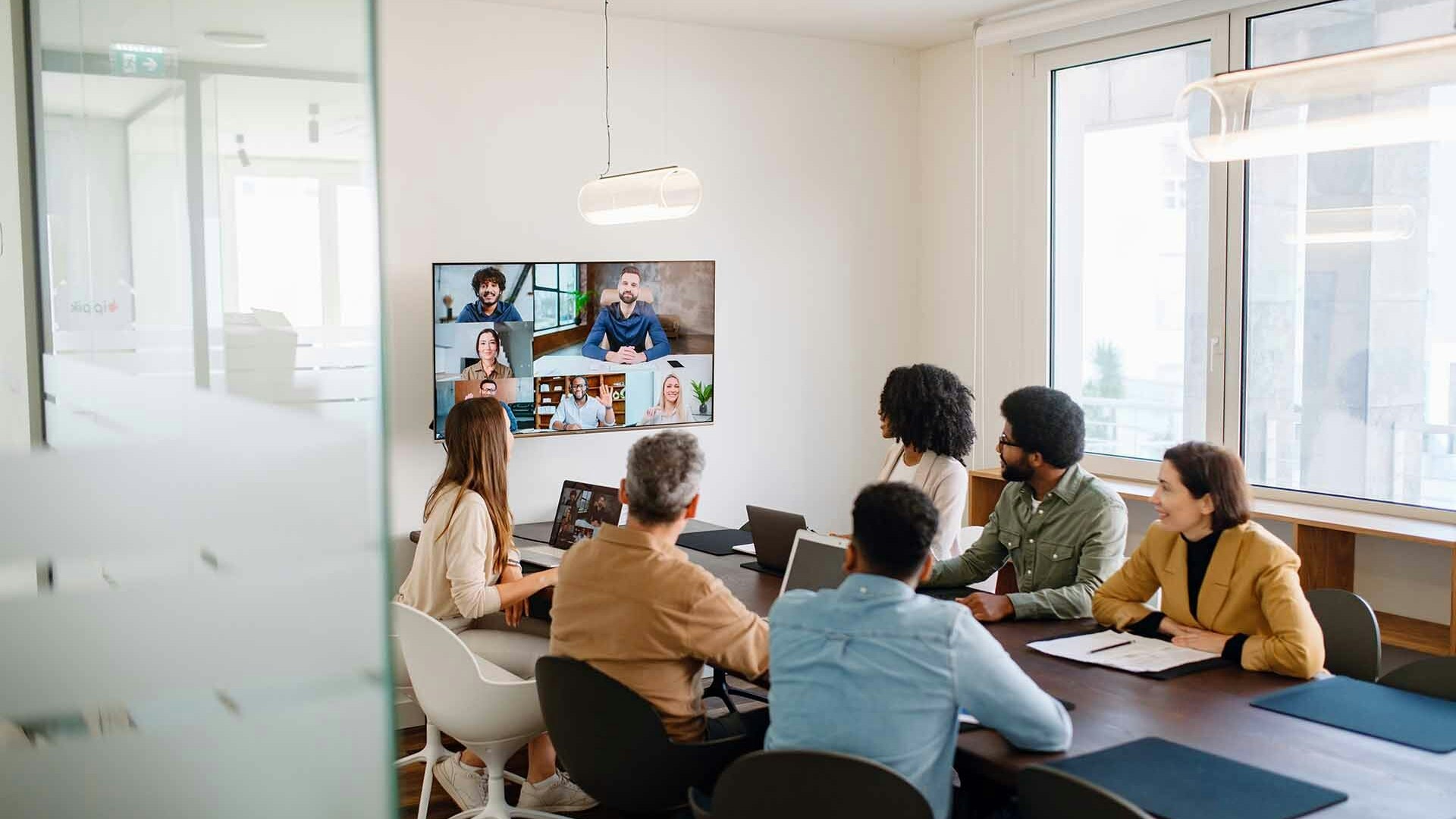
Salary and benefits still matter, but they no longer tell the whole story of why employees stay or leave. According to Paycor, 37% of employees cite poor engagement and culture as their primary reason for leaving a job, a higher share than those who leave over compensation or benefits alone.¹ And while engagement is shaped by many factors, the physical work environment has an increasingly direct hand in it. Where people work, and what that space signals about how a company values its people, influences how connected employees feel to their jobs and to each other.
For HR leaders and executives evaluating office decisions, that connection carries real financial weight. Gallup estimates that replacing a single employee costs between 50% and 200% of their annual salary, depending on the role.² At that rate, a company with even modest turnover is absorbing significant costs that better retention could reduce. The office itself is one of the more underutilized levers available.
What Employees Want From the Office
Gensler’s 2025 Global Workplace Survey, one of the most comprehensive studies of its kind drawing on responses from more than 16,800 office workers across 15 countries, found that employees in great workplaces are nearly three times more likely to stay with their company than those who feel disconnected from their environment.³ Ninety percent of employees who like their workspace say they’re proud to work for their company, compared to just 47% among those who feel disengaged from their space.³
The same survey found that only 14% of global workers want a traditional corporate workplace experience. Instead, employees gravitate toward environments that feel natural, calm and connected, with access to natural light, greenery and a sense of ease.³ Forty percent of global workers ranked access to natural light and operable windows as a top priority, while 36% preferred workspaces with visible greenery.³
This shift has real implications for how companies think about office selection. A space that meets basic functional requirements but neglects the physical and experiential elements employees increasingly expect is a space that accelerates turnover.
Design, Choice and the Performance Gap
Beyond aesthetics, how a space is designed to support different kinds of work matters considerably. Gensler found that employees with a high degree of choice in where and how they work within an office, including access to private focus areas, flexible environments and control over lighting and noise, are 2.5 times more likely to say their workplace supports both individual and team productivity.³
Yet a significant gap persists between what employees need and what most offices currently deliver. Only 26% of workers strongly agree that their current workplace helps them do their best work.³ That number is notable because it means many office-based employees are working in environments that fall short of supporting their performance, a condition that compounds over time into dissatisfaction and departure.
Gensler’s 2026 Global Workplace Survey reinforces how widespread this gap is. Two-thirds of employees report working around their office’s shortcomings rather than being supported by their space, and one in four have resorted to improvised fixes for ergonomics, temperature or visual privacy.⁴ These are signs of a physical environment that employees have adapted to, rather than one designed with their needs in mind.
Wellness Infrastructure as a Retention Tool
The connection between workplace wellness features and employee loyalty is well-established. Office environments that support physical health through access to fitness facilities, outdoor space, trails and high air quality reduce absenteeism and burnout while improving engagement. Gensler’s research finds that employees who describe their workplace as inspiring are significantly more motivated, more innovative and more committed to their organizations.⁵
Gensler’s 2025 survey identified privacy for deep focus as a top priority for employees across all age groups, industries and geographies, with noise levels and lack of privacy ranking among the most commonly cited shortcomings in current office environments.⁶ Addressing those factors through intentional design has a measurable effect on how employees experience and evaluate their workplace day to day.
Gallup’s 2025 State of the Global Workplace report found that companies with highly engaged employees see up to 43% lower turnover.⁷ Wellness infrastructure is one of the more concrete and controllable inputs into that engagement equation.
Location and the Broader Campus Experience
Office space decisions involve more than the four walls of a suite. The surrounding environment, including walkability, access to dining, green space, programming and amenities beyond the building itself, shapes the daily experience of employees in ways that compound over time. A campus or mixed-use environment that gives employees access to food, fitness, community events and green space throughout the workday creates texture and variety that a standalone building simply cannot.
Gensler’s research consistently shows that employees come to the office to connect with colleagues and to do work that benefits from being in person.³ When the surrounding environment supports that through shared outdoor spaces, social programming and easy access to amenities, it reinforces the reasons to show up and, over time, the reasons to stay. For a closer look at what drives that in-person pull, our article on why in-person work wins covers the research behind face-to-face collaboration and its impact on team performance.
What This Means for Office Location Decisions
For executives and HR leaders evaluating office locations, the retention calculus extends well beyond square footage and lease terms. The physical environment is an active variable in employee satisfaction, engagement and tenure. A well-chosen office supports culture rather than working against it.
At Ballantyne, that combination is built into the campus itself. The 535-acre mixed-use campus offers 2.5 million square feet of LEED®-certified office space, as well as all eligible buildings hold ENERGY STAR® and WELL Health-Safety certifications. The physical design prioritizes natural light, air quality and access to more than 20 miles of walking trails and green space, features that align directly with what research identifies as drivers of workplace satisfaction and retention. A campus-wide events calendar, on-site fitness centers, outdoor gathering areas and rotating food programming create the kind of daily experience that gives employees genuine reasons to come in.
Companies evaluating office space in the Charlotte market will find more details on how Ballantyne’s design supports employee experience by contacting our leasing team to schedule a tour.
Sources
- Paycor. “Employee Retention: The Real Cost of Losing an Employee.” PeopleKeep. https://www.peoplekeep.com/blog/employee-retention-the-real-cost-of-losing-an-employee
- Gallup. “This Fixable Problem Costs U.S. Businesses $1 Trillion.” https://www.gallup.com/workplace/247391/fixable-problem-costs-businesses-trillion.aspx
- Gensler Research Institute. Global Workplace Survey 2025. https://www.gensler.com/gri/global-workplace-survey-2025
- Gensler Research Institute. Global Workplace Survey 2026. https://www.gensler.com/gri/global-workplace-survey-2026
- IBA Forum. “How New Work Environments Foster Motivation, Community and Innovation.” Citing Gensler Global Workplace Survey 2025. https://iba.online/en/newsroom/perspectives/how-new-work-environments-foster-motivation-community-and-innovation/
- Gensler. “The Future of Work Is Human: Designing for Culture and Experience.” https://www.gensler.com/blog/future-of-work-is-human-designing-for-culture-and-experience
- Gallup. State of the Global Workplace: 2025 Report. Cited via Circles. https://www.circles.com/resources/workplace-amenities-that-boost-retention